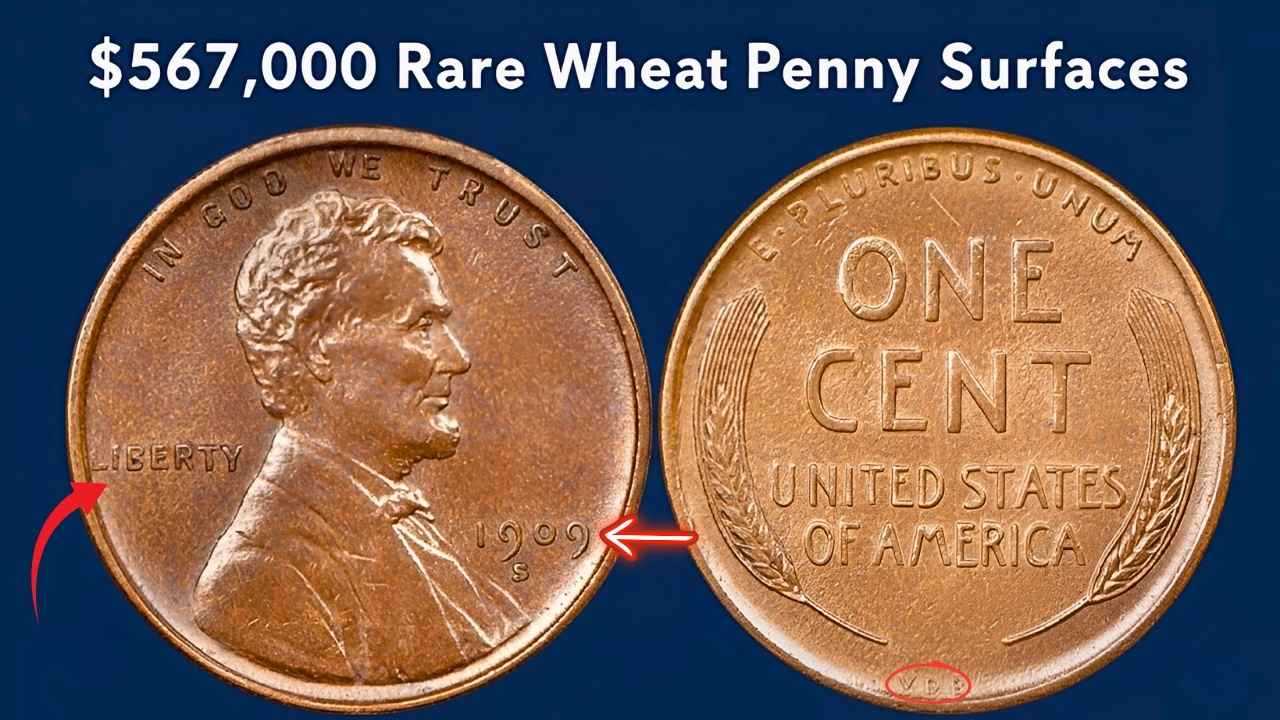
The world of coin collecting is full of surprises, but few discoveries spark excitement like the recent finding of a Lincoln Wheat Penny valued at an astonishing $567,000. What makes this story even more unbelievable is that the coin wasn’t locked away in a collector’s vault or sitting in a museum. Instead, it was found by an everyday individual in ordinary pocket change. This remarkable incident has renewed interest in Wheat Pennies and reminded collectors and casual hobbyists alike that rare treasures can still be hiding in plain sight.
What Is the Story Behind the Valuable Wheat Penny?
The Lincoln Wheat Penny series has always been popular among collectors due to its historical appeal and the wide range of rare variations. Minted from 1909 to 1958, these coins often carry unique minting errors or low-production years that make them highly sought after. In the case of the newly discovered $567,000 penny, its value comes from a combination of scarcity, error characteristics, and exceptional condition.
The person who found it had no idea of its worth at first. What appeared to be a regular penny turned out to be a rare variation produced during a year when extremely limited numbers were minted. After professional grading and authentication, experts confirmed its rarity and assigned it a value that stunned the collecting world.
How Did a Rare Coin End Up in Circulation?
Many rare coins end up in circulation for various reasons. Families may unknowingly spend old coin collections, or forgotten stashes of vintage currency may be used during emergencies. Over the decades, coins that should have been preserved often find their way back into the economy, making discoveries like this possible even today.

In this case, the rare Wheat Penny likely slipped from a private collection decades ago. With countless hands exchanging it across time, it eventually landed in the wallet of someone who recognized that it looked different enough to investigate further. Stories like these highlight the importance of checking pocket change carefully, as rare coins still appear more often than most people assume.
When Did Wheat Pennies Become Highly Valuable?
Wheat Pennies have always held collectible value, but their worth has increased significantly over the last few decades. This rise is due to several factors, including growing interest in numismatics, the scarcity of certain key dates, and the high prices collectors are willing to pay for pristine pieces.
Pivotal years such as 1909-S VDB, 1914-D, 1922 No D, and the famous 1943 Copper Penny have reached iconic status. These coins routinely sell for thousands or tens of thousands of dollars. The discovery of the $567,000 penny is a reminder that even lesser-known variations can skyrocket in value due to rarity and condition.
How Can You Identify a Valuable Wheat Penny?
Knowing what to look for can help you determine whether a Wheat Penny is valuable. While most are worth only a small premium above face value, specific features can dramatically increase a coin’s worth. Signs that a Wheat Penny might be rare include:

Unusual mint markings or missing mint marks
Odd coloration that might result from a minting error
Sharp details that indicate the coin is in excellent condition
Years known for low mintage numbers
Weight differences that suggest an incorrect metal planchet
Collectors often use magnifying tools to inspect details, but even a simple glance can reveal something unusual. If a coin looks different from regular pennies, it’s worth checking online resources or consulting a professional coin grader.
What Role Does Condition Play in a Coin’s Worth?
A coin’s grade is one of the most important factors influencing value. Even a rare variation will lose significant value if worn down or damaged. The $567,000 Wheat Penny was in exceptional condition, classified as one of the highest-graded examples of its type. This rarity of condition added major value to its already scarce characteristics.
Coins stored carefully over the years retain sharp features, clear lettering, and original luster. These qualities make them more desirable to collectors and dramatically increase their price at auction.

Why Are These Discoveries Important for Collectors?
The discovery of a high-value coin in everyday change captures the imagination of both experienced collectors and newcomers. It reminds people that rare coins aren’t limited to experts or wealthy buyers. Anyone, at any time, could stumble across a valuable piece of history.
These stories also help revive interest in numismatics among younger generations, ensuring the hobby remains vibrant. They highlight how historical artifacts often circulate unnoticed, waiting for someone curious enough to inspect them closely.
Key Highlights
A Lincoln Wheat Penny worth $567,000 was found in regular pocket change
Its value comes from a rare variation, exceptional condition, and historical significance
Wheat Pennies minted between 1909 and 1958 contain many key dates and rare errors
Rare coins can still enter circulation through family collections or old coin stashes
Collectors are encouraged to check their coins carefully for signs of rarity
Final Words
The discovery of a $567,000 Wheat Penny serves as an exciting reminder that rare treasures can still hide among the most ordinary items. Whether you’re a seasoned collector or just someone who enjoys small surprises in daily life, it’s worth taking a moment to look closely at the coins you come across. Valuable pieces of history may pass through your hands without you realizing it, and stories like this show that extraordinary finds are still possible. With a bit of curiosity and attention, your next great discovery might be waiting in your pocket.

Disclaimer
The information provided in this article is based on general numismatic knowledge and reported discoveries. Values of rare coins can vary depending on condition, grading, and market demand. Individuals should consult certified coin experts or professional grading services for accurate assessment of rare coins.