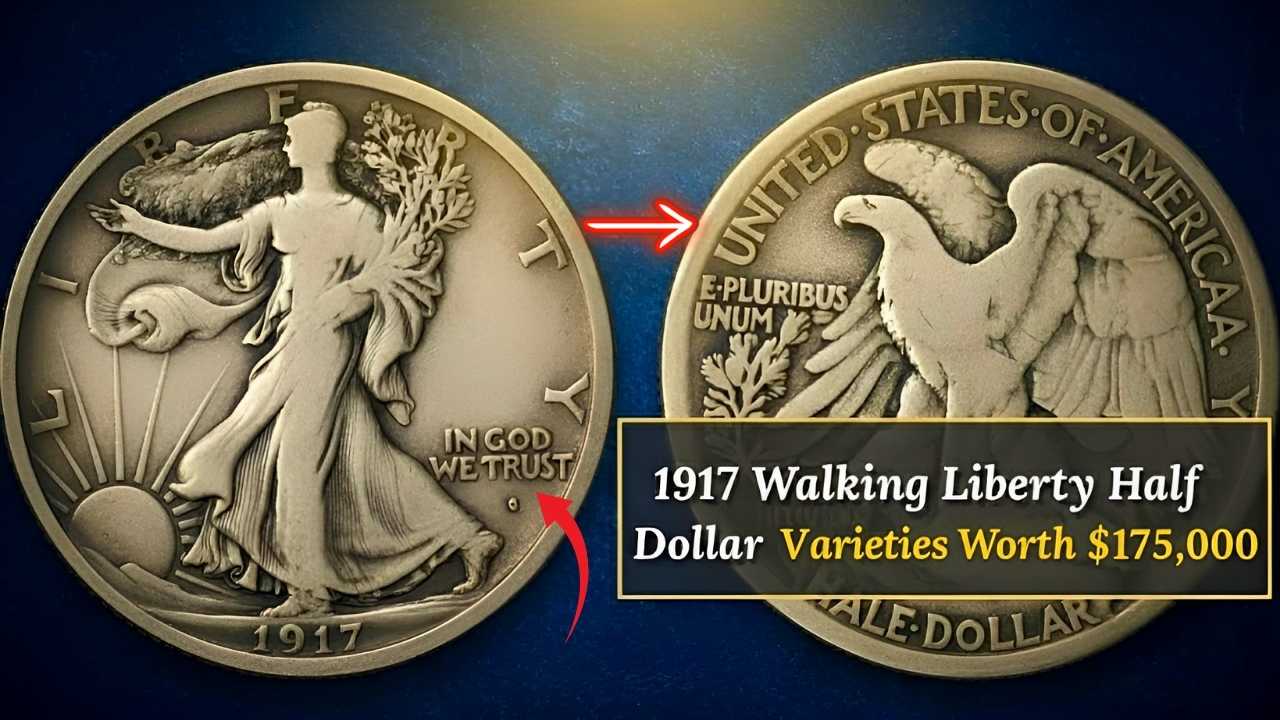
The 1917 Walking Liberty Half Dollar stands among the most admired coins in American history. Its elegant design, historical significance, and rare varieties have made it a sought-after treasure for collectors around the world. While many circulated examples hold modest value, certain rare varieties and high-grade pieces can command astonishing prices, reaching as high as $175,000 in today’s market. Understanding what makes these coins valuable helps collectors recognize opportunities and increases appreciation for this classic piece of American coinage.
Key Highlights
Some 1917 Walking Liberty Half Dollars can reach values of up to $175,000
Mint marks, design placements, and overall condition heavily influence price
The series includes front mint mark and reverse mint mark varieties
High-grade uncirculated coins are extremely scarce and highly prized
Collectors continue to pursue these coins for investment and historical value
What is the History Behind the 1917 Walking Liberty Half Dollar?
The Walking Liberty Half Dollar series began in 1916, replacing the Barber Half Dollar and introducing an artistic new design by sculptor Adolph A. Weinman. The 1917 issue marked only the second year of production, and it continued the striking imagery of Lady Liberty walking confidently toward a rising sun on the obverse, symbolizing hope and freedom. The reverse depicts a strong American eagle perched on a mountain pine branch. In 1917, three U.S. Mint facilities produced this coin: Philadelphia, Denver, and San Francisco. This year is especially notable because of an important mid-year design change involving the placement of the mint mark, creating two major varieties that collectors still seek today.

How Did the Mint Mark Change Affect the Value?
In 1917, the U.S. Mint relocated the mint mark from the front of the coin to the reverse. As a result, collectors now distinguish between 1917-D obverse mint mark, 1917-D reverse mint mark, 1917-S obverse mint mark, and 1917-S reverse mint mark varieties. The obverse mint mark pieces were produced for a shorter time, making them scarcer and more valuable. The reverse mint mark issues had a longer production period but offer collectors a chance to explore subtle design differences. Value depends heavily on which variety a coin belongs to, as some mint-mark placements are significantly rarer than others, especially in high grades.
When Did the 1917 Walking Liberty Become a Valuable Collectible?
Although Walking Liberty halves were widely used in commerce for decades, collectors began appreciating their beauty and scarcity in the mid-20th century. By the 1960s, expanded interest in coin collecting led to greater recognition of key dates and varieties. As more collectors completed full sets, demand for rarer early-year coins increased dramatically. The 1917 issues, especially those with front mint marks or exceptional condition, quickly rose in value. In recent years, improvements in grading standards and auction visibility have pushed prices even higher, with premium-grade coins achieving record-breaking values.
How to Identify the Most Valuable 1917 Walking Liberty Half Dollars?
Collectors look for several key features when determining the value of a 1917 Walking Liberty Half Dollar. The first step is locating the mint mark, which may appear on the front near Lady Liberty’s left foot (for obverse marks) or on the reverse under the pine branch (for reverse marks). Next, assessing condition is essential. Coins graded at Mint State levels, especially MS65 and above, are exceptionally rare. Strike quality also matters, as some 1917 coins show weak detailing, reducing their desirability. Finally, eye appeal, toning, and the coin’s originality can add significant value, especially for collectors seeking visually impressive examples.
What Is the Value of the 1917 Walking Liberty Half Dollar Today?
Values for 1917 Walking Liberty Half Dollars vary widely based on mint mark, variety, and condition. Common circulated examples may be worth between twenty and a few hundred dollars, depending on wear and detail. Scarce varieties in higher grades can reach several thousand dollars. The rarest examples, such as the 1917-S obverse mint mark and 1917-D obverse mint mark in top-tier grades, can reach astonishing values up to $175,000 at major auctions. These prices reflect both rarity and the beauty of the series, making high-grade specimens highly competitive among collectors and investors.
When Should You Consider Buying or Selling?
Buying or selling a 1917 Walking Liberty Half Dollar depends on market timing, condition, and personal collecting goals. Investors often seek coins in the highest possible grades, as these consistently appreciate in value. Collectors, meanwhile, may aim to complete a set or acquire specific varieties. Selling during periods of high market activity or after setting new price records can maximize returns. Buyers should research recent auction results and grading trends to avoid overpaying and to identify opportunities for future appreciation. Professional certification is essential when buying or selling high-value pieces.
How to Protect and Preserve Walking Liberty Half Dollars?
Proper preservation plays a crucial role in maintaining the value of these historic coins. They should be stored in protective holders or albums to prevent scratches, moisture, or tarnish. Avoid touching the coin’s surface directly; handling by the edges or with clean gloves ensures that the design remains sharp and the luster intact. Controlled environments with stable temperatures help preserve the coin’s appearance. For rare or high-value examples, professional grading by trusted organizations adds protection, authenticity, and long-term security, making the coins more appealing to future buyers.

Final Words
The 1917 Walking Liberty Half Dollar remains a powerful symbol of American artistry and historical significance. With multiple varieties, mint-mark locations, and levels of rarity, it offers collectors a fascinating challenge. Values have risen steadily over the decades, with top-grade examples reaching up to $175,000, proving that this coin holds both beauty and investment potential. Whether you are building a serious collection or exploring the world of numismatics for the first time, the 1917 Walking Liberty Half Dollar is a timeless piece that continues to inspire collectors and preserve a unique piece of American heritage.