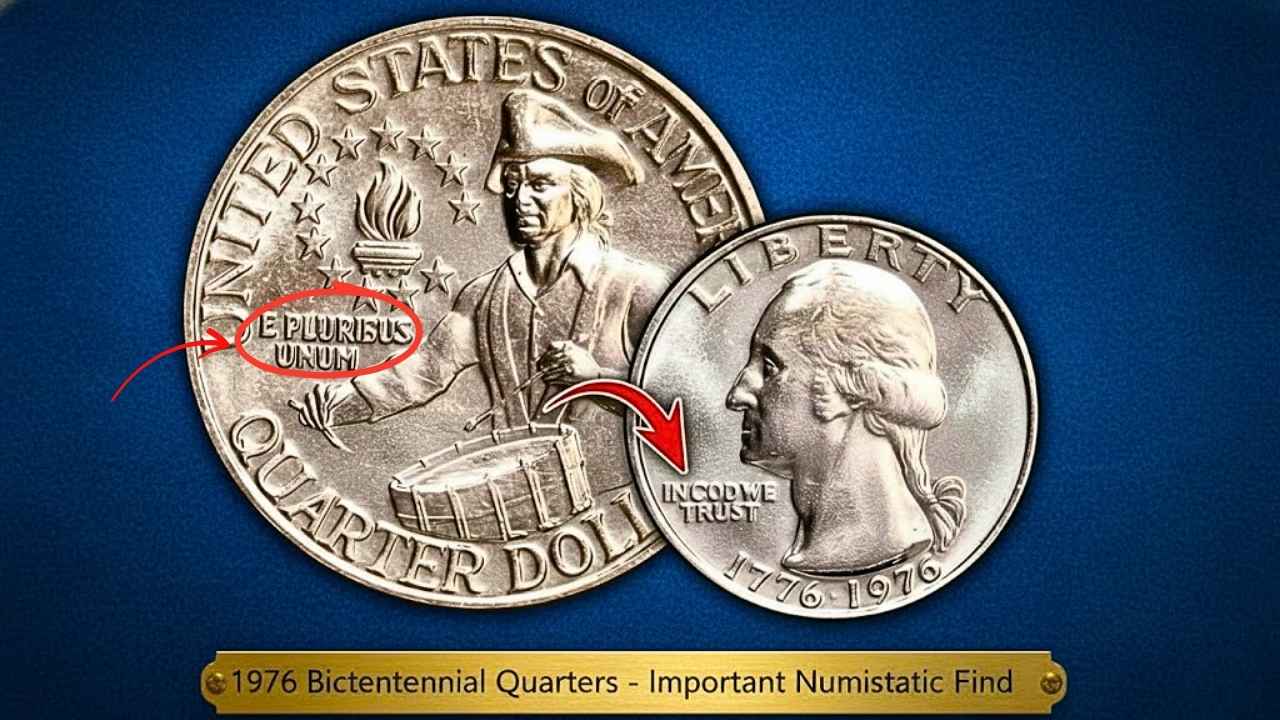
The 1976 Bicentennial quarters hold a special place in American numismatic history. Issued to celebrate the 200th anniversary of the United States, these quarters are unique because they feature a dual date, 1776-1976, and a special reverse design depicting a colonial drummer and a victory torch encircled by 13 stars. While millions of these coins were minted for general circulation, certain variations, mint marks, and high-grade specimens have become highly sought after by collectors and investors. Even today, some of these quarters remain in circulation, occasionally appearing in pocket change, which excites both casual finders and serious numismatists.
What is the History Behind the 1976 Bicentennial Quarters?
The 1976 Bicentennial quarters were part of a special series produced to commemorate the United States’ 200th anniversary. Designed by Jack L. Ahr and Mint engraver John R. Sinnock, the reverse features a Colonial drummer, a symbol of independence and freedom, while the obverse retains the traditional profile of George Washington. The dual date, 1776-1976, was used instead of the regular 1976 date, making these coins instantly recognizable. The U.S. Mint produced these quarters in three facilities: Philadelphia (no mint mark), Denver (D mint mark), and San Francisco (S mint mark, primarily for proof sets). While millions were produced, certain coins with specific mint marks, errors, or pristine conditions have become highly collectible, sometimes valued at hundreds or even thousands of dollars.
When Did the 1976 Bicentennial Quarters Become Valuable?
Although these quarters were issued for general circulation, the collector’s market began recognizing their potential value soon after 1976. Coins that were kept in uncirculated condition, especially from the San Francisco Mint proof sets, gained higher value because of their flawless appearance and limited production. Rare variations, such as double dies or minting errors, also contribute to increased value. Today, even quarters found in circulation can fetch premiums if they show exceptional quality or possess uncommon characteristics. Collectors often look for coins with sharp details, strong luster, and clear mint marks, as these factors significantly influence the market price.
How to Identify the Most Valuable 1976 Bicentennial Quarters?
Identifying valuable 1976 Bicentennial quarters requires attention to detail and knowledge of the minting process. Key factors to consider include the mint mark, coin condition, and any unusual features. Coins with the S mint mark from the San Francisco Mint, especially those in proof sets, are highly prized. Error coins, such as doubled dies or misaligned strikes, also command higher prices. Condition is crucial: uncirculated coins with no wear or scratches are far more valuable than those that have circulated extensively. Tools like magnifying glasses or numismatic guides can help collectors accurately assess a coin’s authenticity and grade.
What is the Value of 1976 Bicentennial Quarters Today?
The value of 1976 Bicentennial quarters varies widely based on condition, mint mark, and rarity. Common circulated coins are usually worth only face value or slightly more to collectors, while uncirculated coins from the San Francisco Mint or rare error coins can fetch hundreds or even thousands of dollars. High-grade coins with exceptional eye appeal are particularly valuable, as they are scarce and highly sought after by collectors who aim to complete premium sets. Prices fluctuate based on demand, market trends, and the coin’s historical significance. Regularly consulting numismatic price guides and attending auctions can help collectors stay informed about current market values.
When Should You Sell or Keep Your 1976 Bicentennial Quarters?
Deciding whether to sell or hold a 1976 Bicentennial quarter depends on personal goals and market conditions. If the coin is a rare proof or error, holding it could result in further appreciation over time. Many collectors prefer to keep these coins in pristine condition, stored in protective holders or display cases to maintain value. On the other hand, if market prices peak or financial needs arise, selling the coin at the right moment can provide significant returns. Tracking auction results, dealer prices, and historical trends helps collectors make informed decisions about when to sell or retain their coins.
How to Preserve the Value of Your 1976 Bicentennial Quarters?
Proper storage and handling are crucial to preserving the value of collectible quarters. Coins should be stored in a dry, temperature-controlled environment and protected in holders or coin capsules to prevent scratches and tarnishing. Handling coins with gloves or by the edges minimizes contact with oils and dirt, which can reduce value. Regular inspection ensures that the coin remains in excellent condition, maintaining its market appeal. For high-value coins, professional grading and certification can provide additional assurance to buyers and increase marketability.
Final Words
The 1976 Bicentennial quarters remain a remarkable piece of American history and a valuable collectible. While millions were produced, certain mint marks, proof coins, and error coins have made these quarters more valuable than their face value, with some commanding significant premiums in the market. By understanding the history, identifying key characteristics, and properly preserving these coins, collectors and investors can make informed decisions and potentially enjoy both financial rewards and historical appreciation. Finding a valuable Bicentennial quarter in circulation today is a rare and exciting experience that connects collectors to a pivotal moment in U.S. history.